1563 stories
·
0 followers

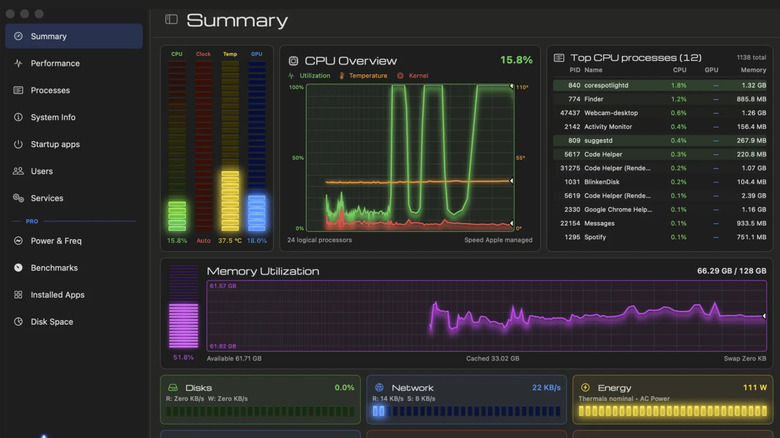
The creator of Windows Task Manager has 'vibe coded' a new version that runs on macOS and Linux

1 Share
Three decades after he wrote the original Windows Task Manager at Microsoft, Dave Plummer is back with a new iteration that works on macOS and Linux too.
Read the whole story
Share this story
Delete

Don't throw away your old Android tablet  — do this instead

1 Share
Android Auto will run right on your tablet's screen with the Open Headunit app.

Read the whole story
Share this story
Delete

What typically uses the most data on a smartphone?

1 Share
Unless it's connected to Wi-Fi all day every day, your smartphone is using up data almost constantly. Here's where your data is going.

Read the whole story
Share this story
Delete

NIH to use part of its budget to pay for Department of Defense research

1 Share

Late last week, word started leaking that the National Institutes of Health (NIH) had reached an agreement with the Department of Defense that would see part of the NIH's budget used to fund research at the Department of Defense. So, on the Friday just prior to a US holiday weekend, the Department of Defense released a copy of the agreement and confirmed that it had been signed roughly a month earlier. The move is striking for a number of reasons, ranging from the existing budget disparities between the two parties involved to the fact that the money would be used for projects that the current NIH leadership has explicitly rejected.

The agreement itself sets up a system where the NIH would transfer money to the Department of Defense to fund staff and projects that would "support the advanced development of medical countermeasures against pandemic influenza, chemical, biological, radiological, and nuclear (CBRN) threats, and emerging infectious diseases." The money would come out of the budget for the NIH's National Institute of Allergy and Infectious Diseases, or NIAID, to which Congress has allocated $6.6 billion in 2026. The agreement is set to run for a decade.

Left unspecified is just how much of the NIAID budget will be spent on Defense projects. Reporting by Nature suggests that the Department of Defense was looking for up to a third of its total budget but was being told to settle for about 10 percent. There's obviously an enormous disparity between the budgets of these two agencies, given that the 2026 Defense budget is roughly $1 trillion. That budget is under considerable strain, however, due to the open-ended nature of the conflict with Iran. The deal has also been announced at a time when the NIH has been struggling to issue sufficient grants to use the money that Congress allocated to it.

That has led some, including Sen. Patty Murray (D-Wash.), to accuse the parties of simply using the agreement as a way to transfer money to the Pentagon without congressional approval. Others are suggesting that this is part of a longer-term effort to shift any biosecurity research out of the NIH and into the Pentagon.

One of the striking aspects of the deal is that it will involve the use of NIH money to fund research that the NIH leadership has explicitly rejected. Prior to the Trump administration, NIAID funded a lot of work directed toward studying the biology of emerging diseases and developing potential defenses. In a commentary published early this year, the Heads of NIAID and the NIH explicitly called for dropping biodefense research from the agency's remit and rejecting things like pandemic preparedness in favor of a focus on "the most impactful infectious diseases that Americans currently face."

Yet the new agreement includes money that will be spent to "protect the United States from future pandemic strains, CBRN [chemical, biological, radiological, and nuclear] threats and other emerging infectious disease." In other words, the NIH will be giving money to the Department of Defense to fund research its leadership doesn't want to see happen.

Very little of this makes any sense, and the agreement itself is remarkably vague, so it will be difficult to determine its consequences until spending data becomes available. That's assuming future Congresses don't simply prohibit this sort of spending, something that its recent actions have suggested it might be willing to do.


Read full article

Comments


Read the whole story
Share this story
Delete

What causes a stuck pixel on your laptop and can it be fixed?

1 Share
Stuck pixels don't have to be a death sentence for your laptop, as there are several options that can bring them back to life.

Read the whole story
Share this story
Delete

AI Insiders Issue New Warnings - Including Former Anthropic Engineer Jacob Coxon

2 Shares
Neither OpenAI or Anthropic is acting responsibly, warned AI researcher Jacob Coxon when resigning last week from Anthropic. But just hours earlier, OpenAI VP of Research Aidan Clark had posted "For the first time, I am asking myself if things are moving too fast. I'm honestly not sure, but I am sure that it would be good for us to have an answer to 'What would a successful pace look like?'" CNN noted Wednesday they're just some of the many AI insiders who are now concerned about the speed of research. Coxon even wrote that "The people building AI earnestly believe that it could kill us all by the end of the decade. This is not a marketing stunt. If anything, many executives and senior researchers will couch their phrasing in the press to sound sensible — but I hear the same people express fear privately." In 10 days since, Coxon's post has been viewed more than 170 million times, warning that OpenAI and Anthropic are "racing straight to self-improving superintelligence and gambling with our lives." It's part of what CNN now calls "pressure on AI companies and governments to do something about the pace of development and safety," where "much of that pressure is coming from staffers inside the companies." One staffer at a top AI company told CNN the fears of how AI could hurt humanity keeps them up at night. Another researcher who recently left a different AI company said it's a common subject of conversation at parties and social events in Silicon Valley. "You can't spend more than a few hours in this community without realizing that a very substantial number of people are really pretty worried about these sorts of outcomes," said the researcher. "A majority would say there's some chance of it killing everyone...." Dozens of Coxon's colleagues in the AI industry publicly supported his statements, with some making even more dire predictions... OpenAI CEO Sam Altman and SpaceXAI CEO Elon Musk agreed to Amodei's proposal to embed independent watchdogs at the AI companies... "I would burn my equity to the ground in a heartbeat for a 1% higher chance we make it out of this situation alive. I expect a great many of my colleagues across the industry would as well," wrote Drake Thomas, who works on AI safety at Anthropic. "I promise you, we are actually just f**king scared, it's not galaxy brained marketing..." AI staffers told CNN that they fear that as AI gets better at training and improving itself, their leverage goes down, prompting today's urgency. "As we get into this recursive self-improvement loop, I think that might substantially reduce staff's bargaining power, because frankly, you'll be able to replace many of the staff with models that can do as good a job," the researcher who recently left a top AI company said. Coxon posted Tuesday on X that Anthropic "largely initiated" the race to recursively self-improving AI, justifying it with "a belief in its inevitability." And then OpenAI "had to shed a bunch of dead weight like Sora," as he sees it, "because Anthropic was going for the jugular." (In fact, his specific disagreement with Anthropic's leadership was whether China and the U.S. could ever negotiate an alternative to their current race towards self-improving AI...) In an informal "Ask Me Anything", Coxon responded to a question about when we'd see a Terminator-like malevolent AI by saying that "Skynet could go live in the 2030s if we aren't careful. ai-2027.com is a modern skynet story written a year ago and it's on track so far." Yet while AI development risks an end to humankind, "I do think that if we go slower we can take risk to 0%... But this requires radical action." He acknowledged there was still a possibility that the steady increases to model intelligence could suddenly plateau, but "They haven't so far, and it's just a few more steps up the ladder to hit the finish line." To avoid stifling innovation, he recommends "prioritizing applications that actually improve people's lives [like healthcare discoveries], rather than immediately going for raw economic value or intelligence." But isn't mass unemployment a more pressing threat? "Things are coming so fast that unemployment would be a brief preliminary to deadly superintelligence." To people who feel disempowered, Coxon offered his solidarity. "I also feel disempowered. Part of resigning was a feeling of hopelessness about the future. I would say — keep your eyes open as things get crazier and advocate for increased transparency into AI companies." When asked if he'd start his own company now, Coxon said he had "No idea what I'm doing next."

Read more of this story at Slashdot.

Read the whole story
Share this story
Delete
Next Page of Stories